Photobucket

Tuesday, June 16, 2009

This Can Change Your Life

I have four young children, and so I am sometimes asked how I find the time to read and write when people find out that I actually do these things. Most of the time, though, the question comes with a judgmental attitude, as if to accuse me of perhaps being lazy, or neglecting my children, or being selfish. I believe the root cause of this attitude, though, is envy. Perhaps the person asking has a self-righteous belief that we mothers are to sacrifice to the point of neglecting our own minds, talents and passions. Or perhaps the person asking struggles with thier own time management skills and so just cannot fathom how I can realistically do it all. Often, though, I discover or notice that this same mother, for example, who asked me how I find time to read, herself watches TV and talks on the phone much.

I have taken many personality tests, and always get the same results. Apparently only 1% of the population has my personality, so perhaps I do not realize how difficult time management can be, but for myself, I am both a doer and a dreamer. This is my personality. INJF's are visionary people who need time alone and usually enjoy reading, but at the same time they are doers because of their "J" preference for closure. I like my home to be clean and neat, but I am not willing to give up my mental nourishment time just so that it will be perfect. I have learned to let some things go for now, while my children are so young. Ten years from now, I will not feel sorry that my home was not perfect, but I would feel sorry if my mind had not grown in those years. Yet this does not mean that I am lazy; I am always on top with the dishes and laundry, and I am doing my best to clean for health and comfort.

When it comes to my children, I read to them A LOT. Obviously, I homeschool so I also spend time with them doing that. And I do my best to always be there for them, to listen to their stories and answer their questions. Even if I am in the middle of something else, I try to remind myself to stop and give them my focused attention when they need it.

I am not perfect at all....I still have room to learn much about housekeeping and child training. But my life does not revolve around these things. I agree with what I read on the Mommy Revolution site: "Life is not all about you, but it’s not all about your kids, either", "Motherhood is just part of a whole and integrated life" and "Our children are one of the many gifts we give to the world."

Today I read a story to Sarah and Peter about King Alfred, which said that he spent 8 hours a day working, 8 hours studying, and 8 hours resting. This made me think of a quote by Charlotte Mason (a 19th century British educator), "Life should be all living, and not merely a tedious passing of time; not all doing or all feeling or all thinking- the strain would be too great- but all living." We need balance.

Especially in our modern times, people often seem to look down upon those who read to learn, unless they are in school. Are our brains supposed to stop growing just because we are "grown up"? Back in the late 19th century, Charlotte Mason wrote,
"The press and hurry of our times and the clamour for useful knowledge are driving classical culture out of the field; and parents will have to make up their minds, not only that they must supplement the moral training of the school, but must supply the intellectual culture, without which knowledge may be power, but is not pleasure, nor the means of pleasure.."

The press and hurry of her times? It is even worse today! Not only do our children need spiritual and intellectual stimulation, but we moms (and dads) do! Charlotte Mason called this "Mother Culture":
"Is there not some need for "mother culture"? So many mothers say, "I simply have no time for myself!" "I never read a book!" Or else, "I don't think it is right to think of myself!" They not only starve their minds, but they do it deliberately, and with a sense of self-sacrifice which seems to supply ample justification. Never be without a really good book on hand...Do not think this is a selfish thing to do because the advantage does not end with yourself. . . The more you study on your spare time, the more there is in you to bestow upon your pupils."

The myth of not having time due to self-sacrifice is false. It may make us look so good, so virtuous, so Christ-like, but it is not based on truth. We need to continue to feed our minds, otherwise they will not grow. First, our minds need to continually feed on God's Word, for that is how they are transformed...that is how we grow the mind of Christ in us...that is how we think God's thoughts, which are truth. The Word of God is LIVING: it changes our minds and our lives. Charlotte Mason said that if we could only read the Bible, that itself would be a liberal education.

But that does not mean we should not read other books. Sometimes I get the feeling that some Christians believe the Bible is all we should read. But is not the Spirit alive in other believers, and still speaking through them? Honestly, the Spirit has spoken and continues to do so even to those who do not necessarily realize it. Charlotte Mason called the Holy Spirit the "Supreme Educator of Mankind", "
in things that have been called secular, fully as much as in those that have been called sacred." God's truth is not *only* found in books that are explicitly "christian".

Charlotte Mason also wrote about the importance of reading "living" books. The Bible is the greatest living book (and the only perfect one, free from errors) but throughout history until today, people are writing living books. Miss Mason said that "
People are naturally divided into those who read and think and those who do not read or think..." You see, reading the right books makes us think...we become "thinkers". Again, I quote Charlotte: "Mind appeals to mind and thought begets thought and that is how we become educated. For this reason we owe it every child to put him in communication with great minds that he may get at great thoughts; with the minds, that is, of those who have left us great works; and the only vital method of education appears to be that children should read worthy books, many worthy books."

But why is it so important for us to read and think? "Knowing that the brain is the physical seat of habit and that conduct and character, alike, are the outcome of the habits we allow; knowing, too, that an inspiring idea imitates a new habit of thought, and hence a new habit of life; we perceive that the great work of education is to inspire children with vitalizing ideas as to every relation of life, every department of knowledge, every subject of thought; and to give deliberate care to the formation of those habits of the good life which are the outcome of vitalizing ideas."

When we become thinkers, and are inspired by a truth or idea, we will want to develop a new habit based on that idea. And as that habit becomes a part of our life, our character is changed.

For example, say we open our Bible and read Philippians 2:14-15, "Do all things without complaining or arguing
so that you may be blameless and innocent, God's children without any faults among a crooked and perverse generation, among whom you shine like stars in the world."

We read this scripture, and think about what it is saying. We are inspired by this new idea to change our habits. So we seek God's grace to not complain and not argue. As this way of living becomes a habit in our lives, our character is transformed. We are changed; and it all began with reading an inspiring idea.

The same can happen through reading anything, whether it be a work of fiction or non-fiction. Not too long ago, I was reading a great book for women, and in the discriptions of what "fallen Eve" may look like, I saw myself. I saw my weakness to become needy, mousy, and clingy. With this, my eyes were opened and then I noticed when I was literally acting out that negative habit. The book gave me a new "idea" that this behavoir was sin on my part, and because I was inspired by that idea, I began seeking God to change these negative habits of mine. As He is helping me to replace them with healthy, faith full habits, my character is changing. Reading that book has resulted in my character being transformed.

Fiction books can likewise change our lives, especially children. They love fiction, and provided it is wholesome, living books that you are reading to them, it is the foundation of true education. True literature should give our children heroes to admire. As they think about their heroes' noble actions, the children unconsciously acquire high ideals and high standards of conduct. I love what Karen Andreola wrote, "This admiration ripens their intelligence until it becomes quick to recognize noble thought and eager to receive its inspiration."

"Great character comes out of great thoughts, and great thoughts must be initiated by great thinkers; then we shall have a definite aim in education."- Charlotte Mason

God is the greatest of thinkers, and we need to read His word to think like Him. But He has also spoken to other great minds that can change our lives forever, if we will but read what they have so liberally shared. Remember, "thought begets thought". We were made with the analytical and creative mind of our intelligent Creator.

About Bible reading and scripture memory for children, Charlotte said: "The mind of the little child is an open field….where, morning by morning, the sower goes forth to sow, and the seed is the Word. All our teaching of children should be given reverently, with the humble sense that we are invited in this matter to co-operate with the Holy Spirit; but it should be given dutifully and diligently…..that the Savior of the world pleads with us to 'Suffer the little children to come unto Me", and "It is a delightful thing to have the memory stored with beautiful, comforting, and inspiring [Bible] passages, and we cannot tell when and how this manner of seed many spring up, grow, and bear fruit."

So, read to your children, and read for yourself! Realize the power of the written word to change lives.

I'll leave you all with this poem:


THE READING MOTHER

Strickland Gillilan

I HAD A MOTHER who read to me
Sagas of pirates who scoured the sea,
Cutlasses clenched in their yellow teeth,
"Blackbirds" stowed in the hold beneath.

I had a Mother who read me lays
Of ancient and gallant and golden days;
Stories of Marmion and Ivanhoe,
Which every boy has a right to know.

I had a Mother who read me tales
Of Celert the hound of the hills of Wales,
True to his trust till his tragic death,
Faithfulness blent with his final breath.

I had a Mother who read me the things
That wholesome life to the boy heart brings-
Stories that stir with an upward touch,
Oh, that each mother of boys were such.

You may have tangible wealth untold;
Caskets of jewels and coffers of gold.
Richer than I you can never be --
I had a Mother who read to me.

Monday, June 15, 2009

Milk, Honey and Oil Oh My!


I want to share some beauty secrets that I have recently learned with you all! These are from the book Beauty Secrets of the Bible by Ginger Garrett.

Facial Routine

1) Wash and Exfoliate

Women in biblical times loved to wash their faces in milk. This is the first step.

1 Cup powered milk (goat's milk such as the one by Meyenberg is recommended, but any powered milk can be substituted)
1 Cup quick cooking oats

Process the powdered milk and oats in blender until mixture is very fine. Store in airtight container, in cool place, for up to four weeks.

When washing face, sprinkle a small amount of the powder onto the palm of your hand and mix into a paste with warm water. Massage onto face and rinse.

"The lactic acids in the milk are a natural source of alpha hydroxy acids that help fight the signs of aging, and the oats soothe and manually exfoliate the skin. Together, these ingredients leave your skin soft and supple." (Beauty Secrets of the Bible, p. 74)

2) Nourish and Plump

One of the most ancient products known to women is honey. Women applied it to their skin, along with oils, as part of their bathing ritual.

Christopher Watt, a facial care expert, uses honey on celebrity's faces.

Apply 1-2 drops of honey to wet fingertips and massage onto wet face. Do not rinse. Pat dry.

Honey is not sticky when applied to damp skin. Honey gives the skin a beautiful glow, plumps up fine lines, it helps the skin attract and retain moisture and helps absorb the moisturizer you apply after cleansing. Packed with nutrients and enzymes, it helps counteract the harmful effects of the environment. Using honey as a routine step in your skin care regimen will help reduce wrinkles as well as aid in treating breakouts. Honey helps fight aging by helping the skin rebuild collagen and elastin and nourishes, rejuvenates and feeds skin. (p. 76 of BSB)

Buy raw honey because it has the most enzymes. The darker the honey the richer it is in mineral content.

3) Moisturize and Protect

Dryness is the leading cause of premature aging, according to experts. Skin needs moisture. Packed with nutrients and antioxidants, olive oil nourishes the skin without blocking pores. It has been used since biblical times.

Place 2-3 drops of extra-virgin, organic olive oil onto your palm. Rub palms together and pat face gently.

Science is catching up with God and now cosmetic companies are cashing in...for ex. you can buy a one ounce bottle of olive oil for $35 from a leading company...but save money and buy a twelve ounce bottle for ten bucks instead.

Your skin will not feel greasy...you will not use enough to saute yourself in but just a couple of drops. Your skin will be soft, radiant and nourished. (p. 79 BSB)

"Two notable women of the Bible relied on oil's benefits to prepare them to woo a man: Esther and Ruth. While we aren't told in scripture what kind of oil they used, olive oil is a likely candidate because of its availability in the region and its established cosmetic use. See Esther 2:12 and Ruth 3:3." (p.79)

To learn more, read Beauty Secrets of the Bible: the Ancient Arts of Beauty and Fragrance by Ginger Garrett.

I have just begun this regimen and am looking forward to the benefits I'm hoping it will reveal on my face!

As a side note, thought I'd also share the perfume I use. A while back, I accidentally found a perfume called "Virtuessence of Esther". About it is written: "Inspired by her integrity, strength and beauty, this one-of-a-kind floriental fragrance captures the heart and essence of Queen Esther." I ordered a sample, and, when I was able to afford it, ordered a bottle. It comes in a gorgeous bottle. The fragrance is soooo lovely...my hubby really likes it and I got a few compliments from others too. So I pretty much stick with this as my fragrance now. The lady who created this scent wants to create others based on biblical women. So you would also be helping her business. I spoke to her via email a little and she is a very sweet and helpful woman. You can order a free sample (just pay shipping). Here is the website: http://virtueandvalor.com/index.html

A Woman of Valor


There is a traditional view of women- that they were made as the weaker sex, created to be helpers and exemplify virtuous characteristics. But is that what God intended when He created woman?

In the very beginning, before the Fall of Man, Adam was alone and God said that was not good. So God made woman, whom He called an "ezer kenegdo". This term is often translated as something along the lines of "a helper comparable to him". Using the word "helper" is not necessarily a wrong description of woman, but what kind of help are we speaking of? What do you think of when you think of a helper? Do you think of someone inferior, someone weaker...perhaps an assistant? Well, that is NOT what woman was created to be!

The term for helper here (Genesis 2:18) is "Ezer", which is actually the word used to describe the kind of help God gives! Here are just a few examples of His help in scripture:

"I lift up my eyes to the hills- where does my help come from? My help comes from the Lord, the Maker of heaven and earth." (Ps. 121:1-2)

"He is your shield and helper and your glorious sword." (Deut. 33:29b)

"But I am afflicted and needy; Hasten to me, O God! You are my help and my deliverer, O Lord, do not delay." (Psalm 40:5)

"Hear, O Lord, the voice of Judah, And bring him to his people; Let his hands be sufficient for him, And may you be a help against his enemies." (Deut. 33:7)

Wow! This sort of help is not that of an assistant, not that of someone inferior at all as God is surely not inferior to those He helps! This sort of help is VITAL help! Recently R. David Freedman has pointed out that the Hebrew word ezer is a combination of two roots: `-z-r, meaning "to rescue, to save," and g-z-r, meaning "to be strong."

The word "ezer" is used to describe woman twice in the book of Genesis, and in all other cases it refers to either God or military allies. In all other cases the one giving the help is superior to the one receiving the help. So it is obvious the term "helper" is not one of inferiority, but before any try to use it as one of superiority, we must consider the next word in what God called woman: kenegdo. She was an ezer kenegdo.

"Kenegdo" means "corresponding to, counterpart to, equal to matching." So adding "kenegdo" after "ezer" modifies the meaning to that of equal rather than superior status. So woman was made to be equal to man, but she was also made to help him with the kind of warrior help as that of God and military allies. This help is STRONG.

How was woman to help man? Genesis 1 says,

1:26
And God said, Let us make man in our image, after our likeness: and let them have dominion over the fish of the sea, and over the birds of the heavens, and over the cattle, and over all the earth, and over every creeping thing that creepeth upon the earth.

1:27
And God created man in his own image, in the image of God created he him; male and female created he them.

1:28
And God blessed them: and God said unto them, Be fruitful, and multiply, and replenish the earth, and subdue it; and have dominion over the fish of the sea, and over the birds of the heavens, and over every living thing that moveth upon the earth.

God said "let THEM have dominion (rule)". God told both man and woman to be fruitful and multiply, and He told both man and woman to subdue, rule and have dominion. There were no differences in status, role, spheres, or authority given here. Man was not told to rule the earth and woman to be fruitful. They were both told to multiply and they were both told to rule. This was God's intention for men and women and this is the way it was before the Fall.

There are other scriptures speaking of a woman's strength, but they are easy to miss, for many translations use the word "virtuous" in place of the real meaning.

Ruth 3:11, Boaz tells Ruth that all the city knows she is a "virtuous" woman. The Hebrew word used to describe Ruth here is "chayil" and it means "strength, might, ability, force, army, wealth." In the King James bible, "chayil" is translated as army 56 times, man of valor 37 times, host 29 times, forces 14 times, valiant 13 times, strength 12 times, riches 11 times, wealth 10 times, power 9 times, substance 8 times, might 6 times, strong 5 times...and virtuous 3 times. And every time "chayil" is translated virtuous, it is referring to a woman. Odd? I noticed this myself, and then later read the following which confirmed my own discovery:

"Virtuous does not represent the teaching of the original text. It should be noted that the only time the word is translated virtuous is when it refers to women. This appears to be a deliberate move by translators to impose their concept of what a woman should be upon the text." (quote from God's Word to Women website)

Boaz told Ruth that she was a "chayil" woman. There is no reason to translate this a "virtuous" woman. Ruth was, instead, a strong woman, a "woman" of valor! She was strong in character, strong spiritually, and strong physically (a hard worker with great ability).

The other times this word is translated "virtuous" is in Proverbs 12:4 and Proverbs 31:10- both referring again to women. Proverbs 12:4 says that "a chayil woman is the crown of her husband." So, a strong woman, a woman of might and power, a woman of valor is she who is the crown of her husband. Saying a "virtuous" woman is incorrect and not fitting to the true meanings of "chayil".

Proverbs 31:10 says "Who can find a chayil woman? For her price is far above rubies." Who is this woman that is so worthy? Not just a woman who is virtuous, no. We could translate this sentence, "Who can find a strong woman?" or "Who can find a woman of valor?" THAT woman is worth more than rubies!

The definition of "strong" would also fit with the rest of Proverbs 31. Verse 13 says that this woman "works willingly with her hands", so she is physically strong. Verse 16 says that she considers a field and buys it, so this woman is intellectually strong. Then look at verse 17: "She girds her loins with strength, and strengthens her arms." There is that key word again: strength.

This worthy woman girds her loins with strength. The Hebrew word for strength here is "`oz" and it means:
1. might, strength
a. material or physical
b. personal or social or political

This same scripture says that she strengthens her arms. Here the word for strengthen is "'amats", which means "to be strong, alert, courageous, brave, stout, bold." Interesting. So, to strengthen one's arms does not necessarily mean to make your physical arms stronger. This word carries with it ideas of courage, boldness and bravery. In fact, if you look up the word for arms, it can mean "forces (political and military)", along with the meaning of one's physical arms.

The woman in Proverbs 31 also does have strength in character, as she "stretches out her hands to the poor and needy", and "opens her mouth with wisdom and on her tongue is the law of kindness". Lastly, she is strong spiritually in that she "fears the Lord" (v. 30). In fact, verse 25 says that "strength and honor are her clothing".

The Amplified Bible gets much closer to the meaning of "chayil": a "capable, intelligent, and virtuous woman" (Proverb 31:10 AMP) Yes, her body is strong, her mind is strong, her character is strong and her faith is strong.

Hebrews have a song they sing about the Proverbs 31 woman, or the "Woman of Valor" as it is called in English! (ESHET CHAYIL in Hebrew) The word is translated "man of valor" 37 times, so why not go along with the Hebrews here and translate this verse: Who can find a woman of valor, for her price is far above rubies.

Here is what the Wikipedia says about the word "chayill": "The word חיל (chayil) appears in verse 10 and 29 of the passage, thought as the summary of the good woman's character. Traditionally it has been translated "virtuous" or "noble." Some scholars have suggested that it rather means "forceful," "mighty," or "valiant" because the use of the word in the Tanakh is almost exclusively used regarding warfare."

Ruth was a strong and mighty woman. A wife whose price is far above rubies and who is a crown to her husband, is a wife who is strong physically, intellectually, spiritually and in her character. She is an Ezer Kenegdo, created to bring vital help to her husband and to all other men and women on earth, as equals...working together with her husband, and with other men, and with other women to fulfill God's mandate to rule and have dominion. She fights in a uniquely feminine way, but stands alongside men as fellow warriors in this battle on earth, with all the strength and might God has given her feminine soul.

"The Lord gives instructions. The women who announce the good news are a large army." (Psalm 68:11 GWT)

Thursday, March 26, 2009

A New Name and More


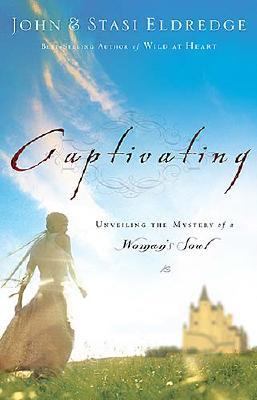
Last week, I received my "Captivating" heart to heart DVD curriculum in the mail. I had bought this after getting a CBD catalog which offered a special code to get the entire curriculum for about 75% off. It was too awesome to pass up on.

So yesterday, I was sitting down to one of the discussions with these lovely women on the DVD. They were sharing their own stories of how God showed each of them His heart toward them, as opposed to the lies the enemy had thrown at them as little girls and even now. One beautiful woman shared how a friend prayed for her one day and felt that God was calling her His sunshine and His delight. These words from God moved her because she had always loved light and the way it reflected on things. Well, not long after this lady's friend gave her that word, her co-worker began calling her "sunshine". He had no idea that God had called her that first. As time went on, God just kept reinforcing to her in a myriad of ways that she was His sunshine, until she finally believed it. Since her childhood, she had felt there was something dark about her. But God broke the lies of the enemy with the truth of how He saw her. He gave her a new name.

Another woman shared how one weekend she went to a retreat and the speakers were encouraging everyone to ask God what His name for them was. The woman sharing this story did so but never "heard" anything from God. Disappointed, she told her friends that she had not heard anything and they prayed for her. She and her friends discussed her struggles with fear and so they prayed over that fear. The character of "Much-Afraid" from the book Hinds Feet on High Places came to this woman's mind, and she thought to herself- that is who I am, Much Afraid. She was thinking about what the enemy called her. But when she got home from her retreat that weekend, she sat down and opened the book mentioned above. Without any intention on her part, she opened it to the very page in which the Shepherd told Much Afraid that she would no longer be called that, but her new name would be Grace and Glory.

I just teared up when I heard these stories. And it made me think of my story.

I will not go into details, but basically I often felt "alone", "neglected", "unwanted", and "undesired". In a way, those were the "names" the enemy would place in my heart. I just did not feel many people were interested in me or delighted in me.

Well, last night God brought a scripture to my mind, and as I went to read it, I realized that there was so much more to it than I had known. I knew it spoke of God giving us a new name, one showing that He delights in us. But I had not known the extent to what else that scripture was saying. As I read it, I knew that God was speaking to me and giving me a new name, or actually two new names (as He did with the "Much Afraid" to "Grace and Glory" woman).

God spoke these names to me: "Hephzibah" (which means my delight is in her) and "Sought Out".

"You shall no more be termed Forsaken...But you shall be called Hephzibah [My delight is in her]... for the Lord delights in you...as the bridegroom rejoices over the bride, so shall your God rejoice over you...Behold, the Lord has proclaimed to the end of the earth: Say to the Daughter of Zion, Behold, your salvation comes [in the person of the Lord]...and you shall be called Sought Out...not Forsaken." (Isaiah 62 Amplified)

Forsaken. That word means neglected and left alone. That is the opposite of delighting in someone. To delight in someone means to take pleasure in them and desire them; which is the opposite of being unwanted.

Wow. God has not forsaken me. He wants me. He takes pleasure in me. He delights in me. He calls me Hephzibah, because His delight is in me. He rejoices over me. Not only that, but He does the opposite of leaving me alone: He calls me "Sought Out". Do you know what that means? It means "to seek with care". I am not forsaken; I am sought out. I am pursued. I am romanced.

God spoke this to me in such a personal way. But it is true for you also.

I will leave you all with these quotes from the book Captivating. We are sought; God does seek us and delight in us.

"Why do our days seem so unimportant, filled not with romance and adventure but with duties and demands? We feel unseen, even by those who are closest to us. We feel unsought- that no one has the passion or the courage to pursue us."

"Most of our addictions as women flare up when we feel that we are not loved or sought after...every woman wants to be seen, wanted, and pursued...We desire to possess a beauty that is worth pursuing."

"We have all heard it said that a woman is most beautiful when she is in love. It's true. When a woman knows that she is loved, she glows from the inside. This radiance stems from a heart that has had its deepest questions answered. "Am I lovely? Am I worth fighting for? Have I been and will I continue to be romanced?" When these questions are answered, yes, a restful, quiet spirit settles in a woman's heart."

"You have been and you will continue to be romanced all your life...every memory you cherish, every moment that has moved you to holy tears, all have been given to you from the One who has been pursuing you from your first breath in order to win your heart. God's version of flowers and chocolates and candlelight dinners comes in the form of sunsets and falling stars, moonlight on the lakes and cricket symphonies; warm wind, swaying trees, lush gardens and fierce devotion...He knows what takes your breath away, knows what makes your heart beat faster."

"God has been wooing you ever since you were a little girl...What romanced your heart as a girl? Horses in a field? The fragrance of the air after a summer rain? Was it a favorite book like the Secret Garden? The first snowfall in winter?...These were all whispers from your Lover, notes sent to awaken your heart's longings."

"We have missed many of his love notes simply because we shut down our hearts in order to endure the pain of life. Now, we must open our hearts again...so that we can hear his whispers, receive his kisses...If we listen, a Sacred Romance calls to us through our heart...it whispers to us in the wind...reaches out to us through the touch of someone we love...we've sensed it at the birth of our first child, been drawn to it while watching the shimmer of a sunset on the ocean...Something calls to us through experiences like these and rouses an inconsolable longing, deep within our heart, wakening in us a yearning for intimacy, beauty and adventure."

"God has written the romance not only on our hearts but all over the world around us. What we need is for him to open our eyes, to open our ears that we might recognize his voice calling to us, see his hand wooing us in the beauty that quickens our heart."

Tuesday, March 24, 2009

Making Reading Fun


I have begun to incorporate more of Charlotte Mason's ideas in my reading lessons. The purpose is to learn the elements of our English language through reading real and interesting material, and not just a list of words. It is also combining sight reading with phonics. I am choosing poems that I would like Sarah to read, and from those poems I am creating her phonics lessons.

For example, here is the poem we began today:

A Kite

I often sit and wish that I

Could be a kite up in the sky
And ride upon the breeze and go

Whichever way I chance to blow


Today Sarah read the first two lines to me. I allowed her to pronounce the word "often" incorrectly, with the normal short o sound. I asked her if that was a word, and then explained to her how in some words the o makes a different sound. I told her the word and she continued to read. The next word I knew she would need to learn is "could". Again, I told her the word and she continued up to the word "sky" which also needed an explanation since she has not yet learned the sounds "y" makes.

Next I wrote a list on our little whiteboard of other words in which o makes the same sound as in "often", such as: off, soft, dog, cloth, etc. I asked her to read those words to me and she did splendidly!

Next I showed her a flash card that had the letter combination of "ould" on it. I told her the sound those letters made together and wrote "ould" on the whiteboard three times. Then I put three different letters or letter combinations in front of each "ould": could, would and should. She read those words to me and now we will need to drill the "ould" flashcard daily as she becomes familiar with that odd letter combination.

Tomorrow I will have her read those two sentences again, review what we learned today and then explain that "y" at the end of "sky" is the long i sound. I'll make a list of other words such as cry, shy, and even longer ones like dragonfly. The next day Sarah will read the last two lines of the poem, and through doing so, she will learn the sound "er" makes (Whichever...under, after, number, person, government, sister, verse, thunder...just to name a few) and then she'll learn "ay" (Way...clay, May, tray, etc) and "ow" (Blow...grow, snow, bowl, window, yellow, elbow, etc). That is how the lessons work.

Eventually she will not only be able to read the words in the poem, but also words that are in the same "word family" whenever they come up. And she will probably have the poem memorized by then, naturally, just by reading it so much! This is just an example of how Charlotte Mason's ideas can be incorporated into reading lessons.

This is a great combination of creativity and imagination ( in the poetry), but also phonics and drill (as we will drill "ow", "ay", "er", etc. with our flashcards daily). This is the approach I will be taking with the rest of Sarah's reading lessons. It makes it a bit more interesting both for her and myself:)

Take Action Today to Help the Helpless


Please take a few moments of your time to let your voice be heard...the most helpless and defenseless need us.

"When we consider that women are treated as property, it is degrading to women that we should treat our children as property to be disposed of as we see fit." - Elizabeth Cady Stanton, an early American feminist

"Before I formed you in the womb I knew you..." (GOD)


1

Stop the Abortion Bailout

Abortion groups have submitted their 50 page proposal to the Obama-Biden transition team. At the top of the list? More taxpayer dollars for abortion organizations like Planned Parenthood. How much more? Over 1.5 billion dollars more!

The Abortion Bailout Package:

  • $1 BILLION dollars in taxpayer funding for International Abortion Groups
  • $700 million in taxpayer funding for “Title X” Health Clinics (aka your local Planned Parenthood affiliate)
  • $65 million for the UNFPA, an international aid organization connected to coercive abortion as part of China’s coercive one-child policy
  • Repeal the Hyde Amendment – Vastly expanding federal taxpayer funding for abortions
  • Include Abortion coverage in any taxpayer-subsidized national health care program
  • Expand taxpayer-funded abortions on military bases
  • Expand taxpayer-funded abortions through the Peace Corps program
  • Expand taxpayer-funded abortions for federal prisoners
Send a letter to your Senators today demanding that they keep your tax dollars out of the pockets of abortion providers.

Take Action Here

-------------------------------------------------------------------------------------------------

2

Comment on Obama's Attack on Conscience Rights


On January 20, 2009, President Bush implemented regulations that would protect health care workers who refuse to participate in abortion-related activities from discrimination. President Obama and his Department of Health and Human Services have published their intent to overturn these regulations. The regulations are intended to educate health care professionals, as well as the general public, about the rights of medical personnel to treat their patients in accordance with their conscience, free from discrimination or intimidation. They also give health care professionals a way to press charges in the event that they experience discrimination. By law the Obama Administration must leave a 30 day period open for the public to comment on his repeal of the right of conscience. Please write into the Department of Health and Human Service today and tell them that you oppose discrimination on account of conscience!

Take Action Here

-------------------------------------------------------------------------------------------------

3


Stop Pro-Abortion Lawyer Dawn Johnsen's Nomination!


Dawn Johnsen has been appointed by President Obama to serve as Assistant Attorney General, Office of Legal Counsel in the Department of Justice. The Office of Legal Counsel advises the federal government on how to interpret policy, law, and regulations in light of the Constitution. Dawn Johnsen will determine the legal course of the entire Administration, deciding what is or isn’t Constitutional. Here is just a brief summary of Dawn Johnsen's pro-abortion creditentials: Dawn Johnsen has worked for the ACLU’s Reproductive Freedom Project and she was the legal director for the National Abortion Rights Action League (NARAL). Johnsen has compared pregnancy to slavery. In 1989, she wrote that abortion restrictions such as the partial-birth abortion ban and parental notification laws result in “forced pregnancies”, which she claimed amounts to “involuntary servitude”. She has argued that the government should strip the Catholic Church and other religious denominations of their tax exempt status because of their pro-life advocacy. She believes that a pre-born child has no separate existence apart from the mother and a women’s right to bodily autonomy always overrides the pre-born child’s development and health. She has compared pro-life protesters to the Ku Klux Klan. She was heavily involved in the authorship of the Freedom of Choice Act (FOCA), which would repeal every state and federal restriction on abortion and further enshrine abortion as the law of the land. In a paper given to mark the 35th anniversary of the Roe v. Wade decision she said the first priority of the progressive agenda was to “focus on the courts as the vehicle of desired change”. Johnsen has a long track record of intolerance to positions conflicting with her own pro-abortion agenda. Write your Senators today and stop Dawn Johnsen’s nomination to the Office of Legal Counsel.

Take Action Here


Tuesday, March 10, 2009

Made In God's Image, as a Female Part 5: Interdependent Ezers


This will be my last entry regarding how women uniquely bear the image of their Creator. That is, until God reveals more to me, which I think He will:)

Let's recall the creation of the first man and the first woman together. Genesis 1 reveals to us how God, being a Trinity of Father, Son and Spirit, said: Let us make man in our image...and let them rule...over all the earth. So God created man in his own image...male and female He created them. God blessed them and said to them, Be fruitful and multiply. Fill the earth and subdue it. When we read on to Genesis 2, we learn a more detailed account of creation: There was no man to work the earth God made until He formed Adam out of the dust of the ground. He put Adam in the garden to care for it. Then God said that it is not good for the man to be alone, and He would make an "Ezer" for the man. So He formed all sorts of animals out of the ground and brought them to the man. Adam named them, but none of them met his needs. None of the animals was the Ezer for Adam. So God caused Adam to sleep, and removed one of his ribs while he slept. That rib God fashioned into a woman, and brought her to the man. Adam finally had what he so desired and called Eve bone of his bones and flesh of his flesh.

In your Bible, the Hebrew word "Ezer" is probably translated as "helper". And I think that translation is fine, as long as we understand just what it means to be a "helper". As women, God made us to be helpers, yes. But what do you think of when you picture your design as a helper? What kind of help are we speaking of?

Did you know that a woman is a helper the same way God is our helper? It is true. Here is another aspect in which God and women share characteristics. Here is another way we bear the image of God. Just as He is an "Ezer", we are an "Ezer". "The word ezer is used only twenty other places in the entire Old Testament. And in every other instance the person being described is God Himself, when you need him to come through for you desperately." (Captivating) Here are some scriptures in which God is said to be our help, or our ezer:

"He is your shield and helper and your glorious sword." (Deut. 33:29b)

"I lift up my eyes to the hills- where does my help come from? My help comes from the Lord, the Maker of heaven and earth." (Ps. 121:1-2)

"We wait in hope for the Lord, He is our help and our shield." (Ps. 33:20)

The following revelations are from the book Ruby Slippers:

An Ezer delivers: "The God of my father was my help, and delivered me from the sword of Pharaoh." (Exodus 18:4)

An Ezer is a warrior: "Hear, O Lord, the voice of Judah, And bring him to his people; Let his hands be sufficient for him, And may you be a help against his enemies." (Deut. 33:7)

An Ezer supports: "May He send you help from the sanctuary and support you from Zion." (Psalm 20:2)

Ezer delivers the afflicted and needy: "But I am afflicted and needy; Hasten to me, O God! You are my help and my deliverer, O Lord, do not delay." (Psalm 40:5)

Ezer gives hope: "How blessed is he whose help is the God of Jacob, whose hope is in the Lord his God." (Psalm 146:5)

"Woman is Man's Ezer- she is a delivering, warring, supporting, shielding, capable, and vibrant female image bearer of God. What about putting those words in our Bible's margin to refresh our understanding of helper?" (Ruby Slippers)

Now I hope all my readers have a better understanding of a woman's "helper" design. It is a powerful, vital part of her soul. Eve was right there with Adam when God told them to "rule" the earth and "subdue" it. Both man and woman are made for dominion.


"Have you ever wondered why the Cinderella story keeps haunting us?...Why is this notion of a hidden princess (and a prince who comes to find her) so enduring? Is there something in our hearts that is trying to speak to us? Is it just a fantasy, escapism? Or is it something more?...We are reminded of Pascal's metaphor, that our unmet longings and unrequited desires are in fact 'the miseries of a dethroned monarch.' Mankind is like a king or queen in exile, and we cannot be happy until we have recovered our true state. What would you expect the Queen of a kingdom and the beauty of a realm to feel when she wakes to find herself a lundress in a foreign land? A woman's struggle with her sense of worth points to something glorious she was designed to be. The great emptiness we feel points to the great place we were created for. It's true. All those legends and fairy tales of the undiscovered princess and the beauty hidden as a maid are more accurate than we thought. There's a reason girls resonate with them so." (Captivating)

We were created as Ezers, and an Ezer is vital. She is needed.

And we not only are needed, but we like the fact that we are needed. We want to be needed. Somewhere deep down, we know that we were created to fill a need. And thus, most women are very relational, or what can be termed "interdependent" (term taken from Ruby Slippers).

"Because I am interdependent...I desire to be needed by others. Relationships provide the means for me to understand my past, my goals, my character, my work, and my methods, and I emotionally want that." (Ruby Slippers)


Think about the beginning of creation again. Eve was created because it was not good for the man to be alone. She was not only created for another, but she was created from another. All else was created out of the dust of the ground, but not Eve. She was created from another human, the man. This alone reveals something amazing.

"Her first experience and environment was with another. She glided from life with God (he made her while man was asleep, bringing her to him) into a comradeship with Adam. She experienced human interaction soon after her creation. She exists and immediately is known. The first words Eve hears is the language of another loving her back. She awakens to be needed and loved. She lives and is quickly united to another. There are no long hours of naming and waiting and feeling alone." (Ruby Slippers)

Is it no wonder that women are such relational humans then?

"Man's love is of man's life a thing apart; 'Tis a woman's whole existence." (Byron)

"The interdependence that colors our souls is when our identity emerges from within our intimacy, when we see ourselves as 'me in a relationship' rather than 'me as autonomous'." (Ruby Slippers)

So women tend to be interdependent, relational to their core humans. Looking at the creation of Eve, we can understand why. But is there more to this? Do we reveal something of the character of God through our interdependence? Is this another way we are made in His image?

Remember the Trinity.

God has always been three persons- Father, Son and Holy Spirit. They always had each other. Neither was ever one alone. And their identity was always connected with the others in the Godhead.

"Eve is like God in that she knew life in relationship and love; she was never a lone human. Like God, Eve experienced identity with another who was equal to her." (Ruby Slippers)

"As echoes of the Trinity, we are relational to the core..." (Captivating)

"Christianity dignifies interdependence. It is the only religion that offers interdependence in the very nature of God...His identity is forged from his intimacy more than the most interdependent...woman....When women depend on each other, we are smaller pictures of the Trinity...If we ever wonder if our interdependence is essentially weakness, we need only look to God...We are like God when we engage in identity making relationships." (Ruby Slippers)

How else does a woman's relational nature speak to us something of God? What does it reveal?

"Most women define themselves in terms of their relationships, and the quality they deem those relationships have. This is not a weakness in women- it is a glory. A glory that reflects the heart of God. The vast desire and capacity a woman has for intimate relationships tells us of God's vast desire and capacity for intimate relationships." (Captivating)

"We are just small souls compared to God and can only handle a small portion of His soul characteristics. God is 'bigger', so He can handle more good, more love, more intimacy, more choices, more emotions." (Ruby Slippers)

"So God endows woman with certain qualities that are essential to relationship, qualities that speak of God. She is inviting. She is vulnerable. She is tender. She embodies mercy. She is also fierce and fiercely devoted...Our God is a tenderhearted God who yearns for relationship with us. If you have any doubt about that, simply look at the message he sent us in woman." (Captivating)

A woman reveals something of God's nature on earth through her relational gifts. She reveals that God desires relationships with us. God is relational to His core. She also reveals that God has an amazing capacity for relationships, one we cannot fully understand. But through woman, we can get a better picture of it. A woman's soul is often able to enjoy vast relationships- she desires them and has the capacity for vast intimacy. Now, if her soul is just a small picture of God's soul...then, wow. His soul can handle so much more love and intimacy than hers. His desire for relationships is much greater than hers. His capacity for intimacy is much deeper than hers. We cannot even fathom his soul's capacities! But Woman gives us an idea of how God's soul can be with all of us, always, and how He loves us all intimately, not just as "the world".

Here is a wonderful sentence to sum up an Ezer: "We were made to be a part of a great adventure. An adventure that is shared. We do not want the adventure merely for adventure's sake but for what it requires of us for others. We don't want to be alone in it; we want to be in it with others." (Captivating)

Monday, March 9, 2009

Made In God's Image, as a Female Part 4: Vulnerability


In previous blogs, I shared with my readers insights that I have myself learned, regarding how a woman is made in the image of God, uniquely as a female. This entry will be about another aspect women and God share: their vulnerability.

Could a woman's vulnerability reveal God's vulnerability to us? Hmmm....let's look at a few scriptures:

~"Husbands, likewise, dwell with them with understanding, giving honor to the wife, as to the weaker vessel, and as being heirs together of the grace of life, that your prayers may not be hindered. " (1 Peter 3:7)

A woman is the weaker vessel? What does the word weaker mean? Is that the best word to translate this passage?

The word "weaker" is the Greek word "asthenes"....and that same word is used to describe God Himself!

~"Because the foolishness of God is wiser than men and the weakness of God is stronger than men." (1 Corinthians 1:25)

The weakness of God?? Yup, it is the same word used to describe a woman's "weakness": asthenes. A woman has "weakness" just as does the God who made her. But is God weak? What does the word "weak" really mean?

We see it used here again:

~"For though He was crucified in weakness, yet He lives by the power of God." (2 Corinthians 13:4)

~"And he said to me, "My grace is sufficient for you, for My strength is made perfect in weakness." (2 Corinthians 12:9)

"Theologian Dr. Sarah Sumner notes that 'weakness' or asthenes must mean something other than 'inherent inferiority' since God cannot be inferior. She has translated the Greek word asthenes into a more helpful word: 'vulnerability, or a willingness to be responsive'. See how well it works: The vulnerability of God is stronger than men. Jesus was crucified because of vulnerability. Live with your wives...as the more vulnerable vessel...This word connects God with women." (Ruby Slippers by Jonalyn Grace Fincher p. 110)

It is pretty obvious that a woman is physically more vulnerable. She is not as strong as a man. In her book, Jonalyn Fincher raises the question of whether or not the first woman, Eve, was just as strong as Adam before the Fall. Well, this is just my opinion- but I don't think Eve was. I don't think a woman's physical vulnerability is a negative aspect of the Fall. I am of the opnion that God specifically made Eve weaker so that Adam could protect her and sacrifice for her, thereby showing us how God is stronger than us and takes care of and protects us:) I enjoy being physically weaker. I love to see masculine strength in action. I like when men open a door for me, or offer to carry something heavy, etc. It is not that I cannot open my own door, but it is a way to honor me as the "weaker vessel"....a way to show a woman that you intend to be caring and respectful, and not take advantage of her physical vulnerability.

But our physical vulnerability is not how we bear God's image. First off, God does not have a body. Secondly, if He did, He would not by vulnerable in it. Our body symbolizes how our souls are vulnerable though. "German religious philosopher Hanna-Barbara Gerl-Falkovitz did research on the anthropology of the sexes, and found that 'our body is the bearer and expression of something interior....the observation of the body serves as a principle of the female soul and mind." (Ruby Slippers)

So a woman's body is an outward representation of her soul. And it is in her soul where she bears God's image. Two poems just came to my mind, and here are a few words from each:

Angel: And she is much softer. Her body, her hair... God: Aaahhh, the softness is part of the fascination. Angel: Her body dents in and out! God: I call these curves. They are part of the softness. Angel: Can she feel? God: Oh yes! She feels deeply: joy, love, sorrow.
A different poem:

The angel moved closer and touched the woman. "But you have made her so soft Lord." "She is soft", the Lord agreed, "But I have also made her tough. You have no idea what she can endure or accomplish."
The angel then noticed something, and reaching out, touched the woman's cheek. "Oops, it looks like you have a leak in this model..." "That's not a leak," the Lord corrected, "That's a tear!" "What's the tear for?" the angel asked. The Lord said, "The tear is her way of expressing her joy, her sorrow, her pain, her disappointment, her love, her lonliness, her grief and her pride."

These beautiful poems reveal how a woman's outer softness symbolizes her inner softness- her vulnerability.

"God made a woman's body, not out of a clay mold, but out of a piece of living flesh. Woman's original material was more vulnerable than man's; she was made out of living cells. Vulnerability requires that we have places that are tender, places we can be affected, touched..." (Ruby Slippers, p. 112)

"Dr. Jerry Root, a...friend...shared how he saw his wife's tears as an emotional act of vulnerability, no less sexy than her breasts and no less alluring than her invitation to bed." (Ruby Slippers, p. 115)

"The root of 'vulnerable' means 'to wound'...God "made the woman with an open wound in her body"...sex...turns the most vulnerable parts of us into the tools for recreation, delight, pleasure, beginnings. It is a picture of what we want to do with our souls...the way a woman opens herself to a man, proving that her physical vulnerability is also strength...When a woman is vulnerable, she glorifies God in sharing her weaknesses. She marries honesty and transparency in her soul, and in doing so, images God. Vulnerable women are Godlike." (Ruby Slippers)

"Softness is key to a woman. Not weakness-softenss. Tenderness." (Captivating)

"A woman who is full of tender mercy and soft vulnerability is a powerful, lovely woman." (Captivating)

So in our vulnerability we image God. That is powerful. Those tender places, the tears, the openess all were given to us by our Maker as a way to show the world what He is like.

"Offering a tender vulnerability can only be done by an incredibly strong woman, a woman rooted in Christ Jesus who knows whose she is and therefore knows who she is." (Captivating)

Lastly, I want to comment on this scripture: 1 Cor. 12:22-23a

22 No, much rather, those members of the body which seem to be weaker are necessary. 23 And those members of the body which we think to be less honorable, on these we bestow greater honor..."

Again, the word weaker in the above scripture is the same word we discussed earlier.

A woman's vulnerability is necessary. God put femininity in this world because it was needed. The world needs a woman's vulnerability. Husbands are told to "dwell with their wives with understanding, giving honor to them as the weaker vessels". God wants men to understand their wives' vulnerability, and not treat them harshly or belittle them for their sensitive souls, but rather honor them as a more vulnerable vessel should be honored, treated tenderly and cared for gently.

"When we feel criticized or hurt, it doesn't help to hear people say, 'Stop being so sensitive.' You might as well tell me to turn off my soul, to deaden part of my natural femininity...To tell a woman to toughen up...is like clipping the wings of a bird. You never get to see the full plummage in her wingspan or watch her soar and plummet in freedom. A woman's sensitivity can be a mark of vulnerable strength." (Ruby Slippers)

God is vulnerable and has therefore put this trait in Woman. She reveals God's softness to the world and that should be honored.


blogger templates | Make Money Online